
London, UK, 8thApril, 2026
Fraiya Ultrasound todayannounced the successful enrolment of the first patients in The FraiyaStudy (thefraiyastudy.org/), marking a major milestone as the companytransitions from product development into real-world clinical validation.
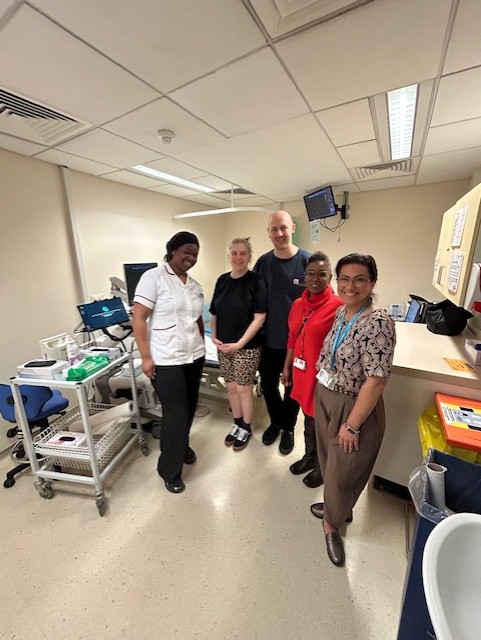
The study led by King’sCollege London enrolled its first patients at Guy's and St Thomas' NHSFoundation Trust Women’s Health Centre of Excellence (CoE), one of the UK’sleading centres for maternity care.
The Fraiya Study funded bythe National Institute for Health and Care Research is designed to evaluate howartificial intelligence can enhance prenatal ultrasound by supportingsonographers in delivering more consistent, efficient, and high-quality care duringroutine pregnancy scans.
The randomised controlledtrial plans to recruit 9600 participants across four NHS hospitals evaluatingthe real-world impact of Fraiya’s AI technology across three key areas:
“This is a defining momentfor Fraiya,” said Fraiya’s Chief Medical Officer and Clinical Research Fellowand Sonographer, King’s College London, Dr. Jacqueline Matthew. “Welcoming ourfirst patients into The Fraiya Study represents the transition from innovationto real-world clinical implementation. We are incredibly grateful to the teamat Guy’s and St Thomas’ and to Dr. Surabhi Nanda for their leadership andcollaboration in making this possible.”
The study aims to generaterobust clinical evidence on how AI can support healthcare professionals underincreasing pressure, helping to reduce variability in ultrasound examinationswhile improving workflow efficiency and diagnostic confidence.
Fraiya Ultrasound’stechnology has been developed to integrate seamlessly into existing clinicalworkflows, acting as a real-time support tool for sonographers rather thanreplacing clinical expertise. By combining AI-assisted scanning with remoteexpert review capabilities, the platform seeks to standardise care delivery andelevate the overall quality of prenatal screening.
“This is just thebeginning,” the company added. “The collaboration between clinicians,researchers, and engineers is central to shaping the future of pregnancycare—and we are proud to be part of that journey.”